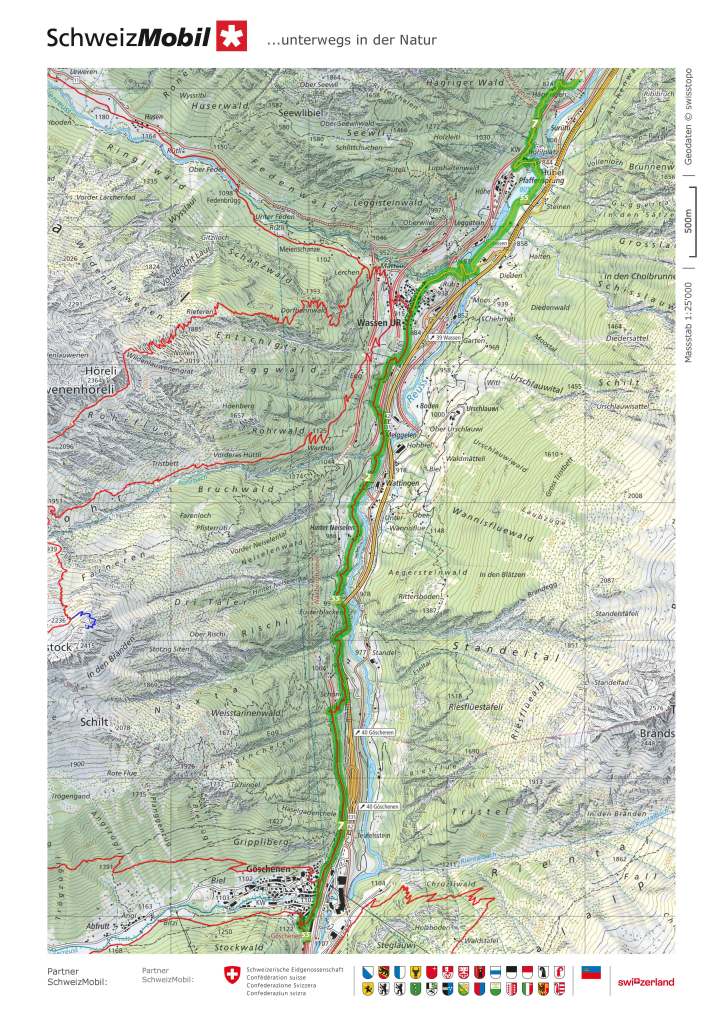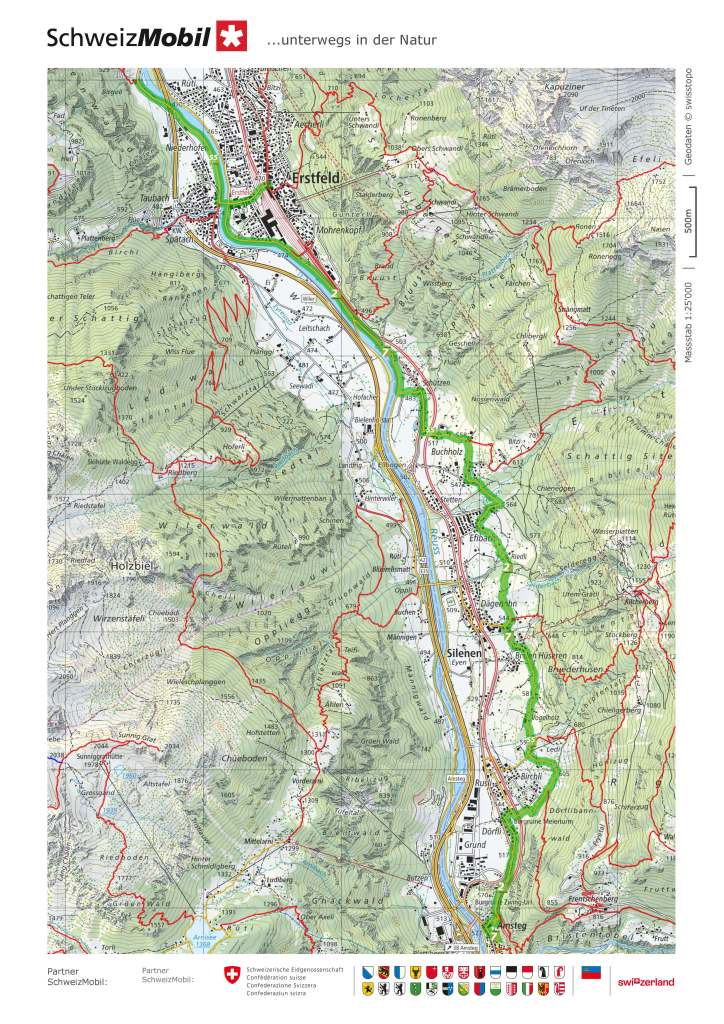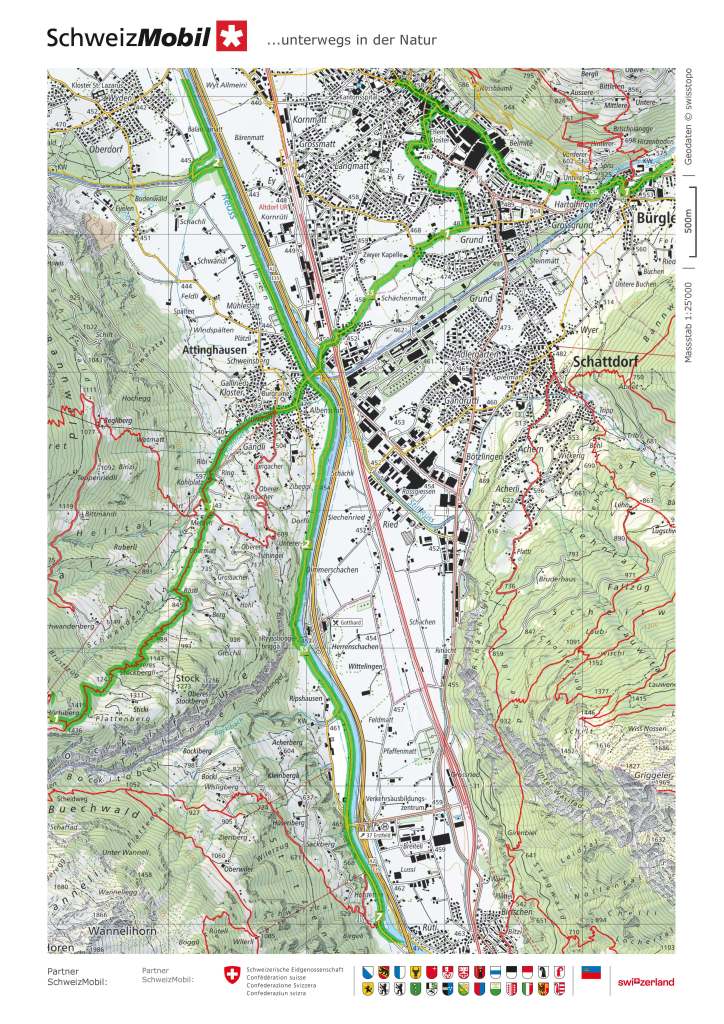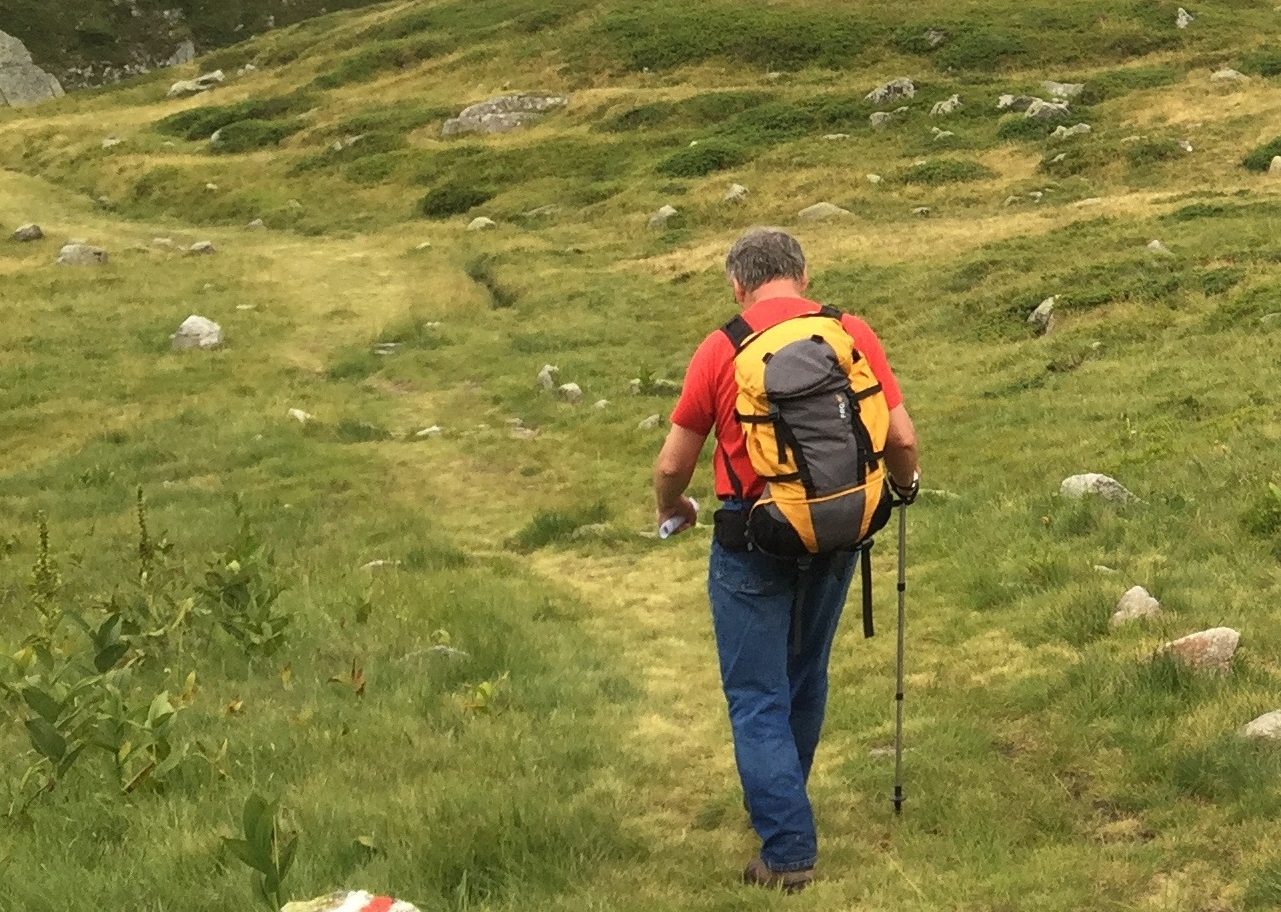
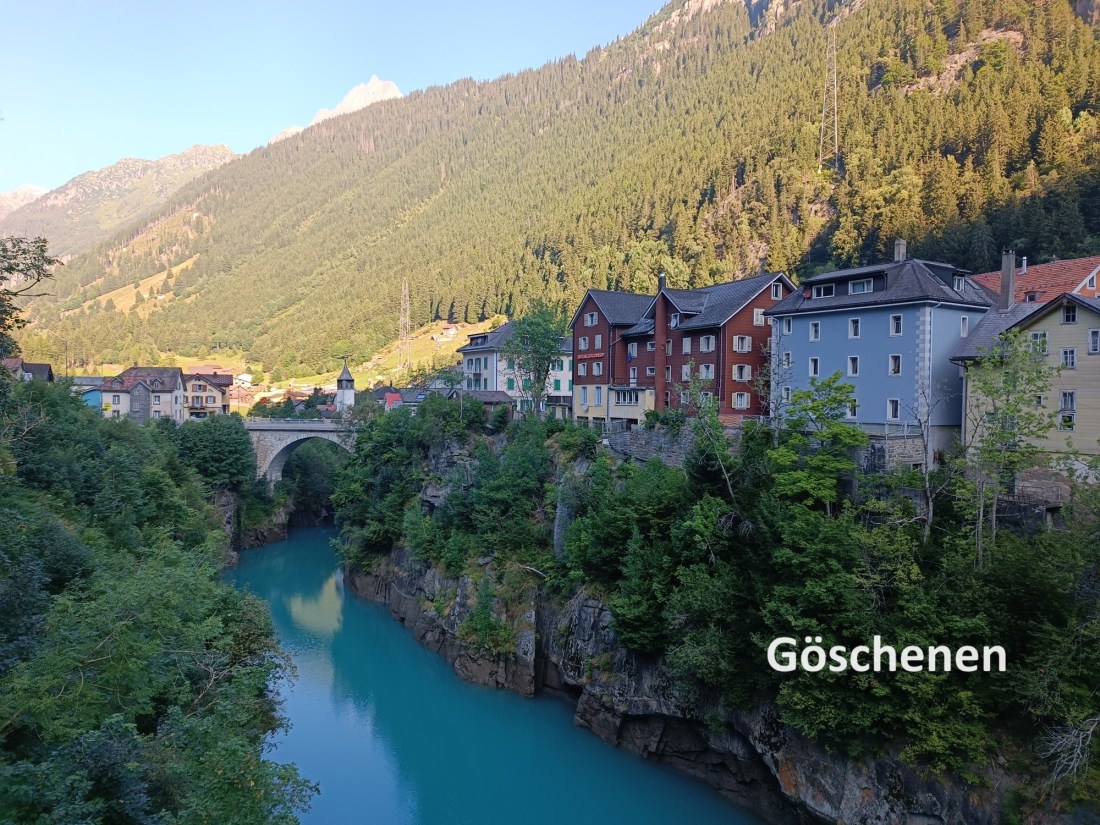
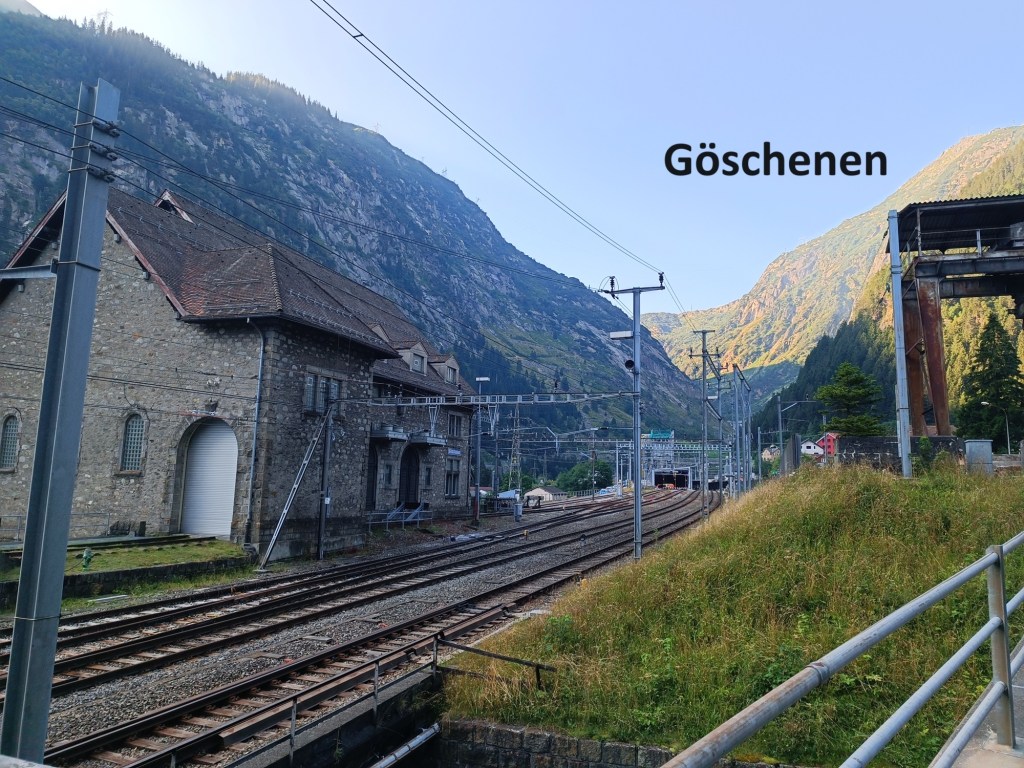
A few days later, I was back on the trail again. The train brought me to Göschenen early in the morning. I stepped off the train and started walking immediately, heading northwards and down the valley. I suspect that the route taken by Suvorov follows closely to the road, but the trail is very much a hiking route, and in places, it is easy to understand why it is classed as a Bergwanderweg. One would imagine that the route down the valley is always going downward, but the trail has several ascents to pass obstacles on its way.


Suvorov’s march down the valley of the Reuss was uncontested. An Austrian force under General Auffenberg was approaching Amsteg, a village farther down the valley, and threatening to cut off the French forces. The Frech destroyed several bridges, hoping to delay Suvorov, but nevertheless he reached the next village of Wassen on the evening of 25th September 1799, the same day as he had taken the bridge at Andermatt. The French managed to hold back the Austrians at Amsteg, and so were able to withdraw all their remaining troops in the valley.
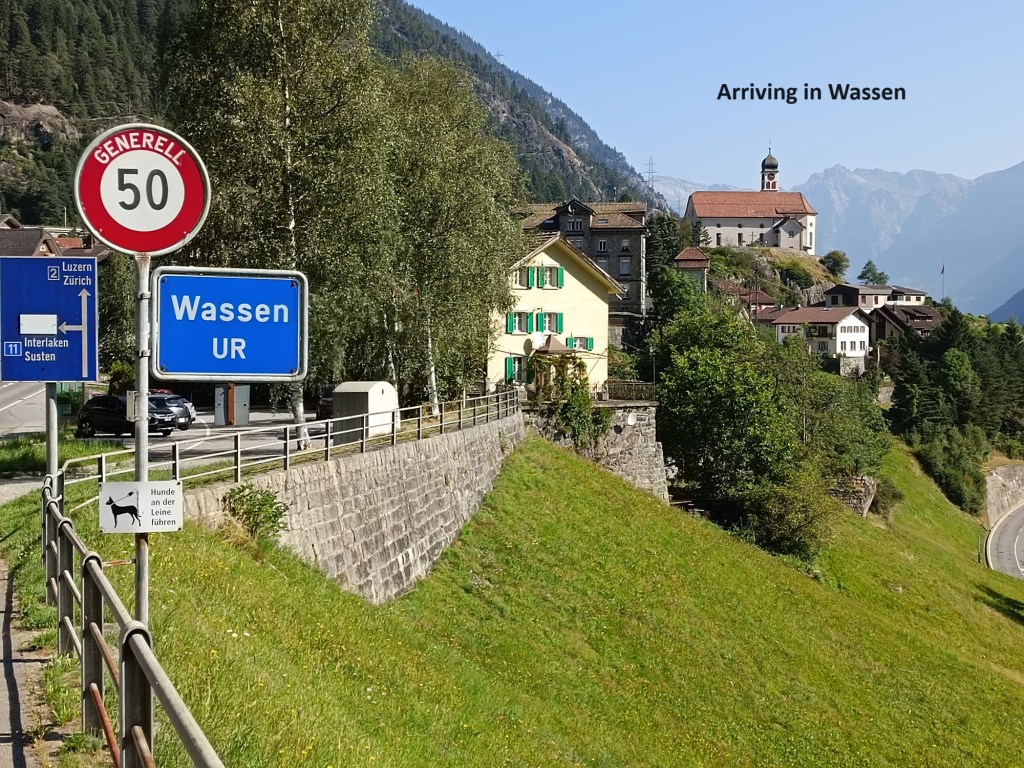
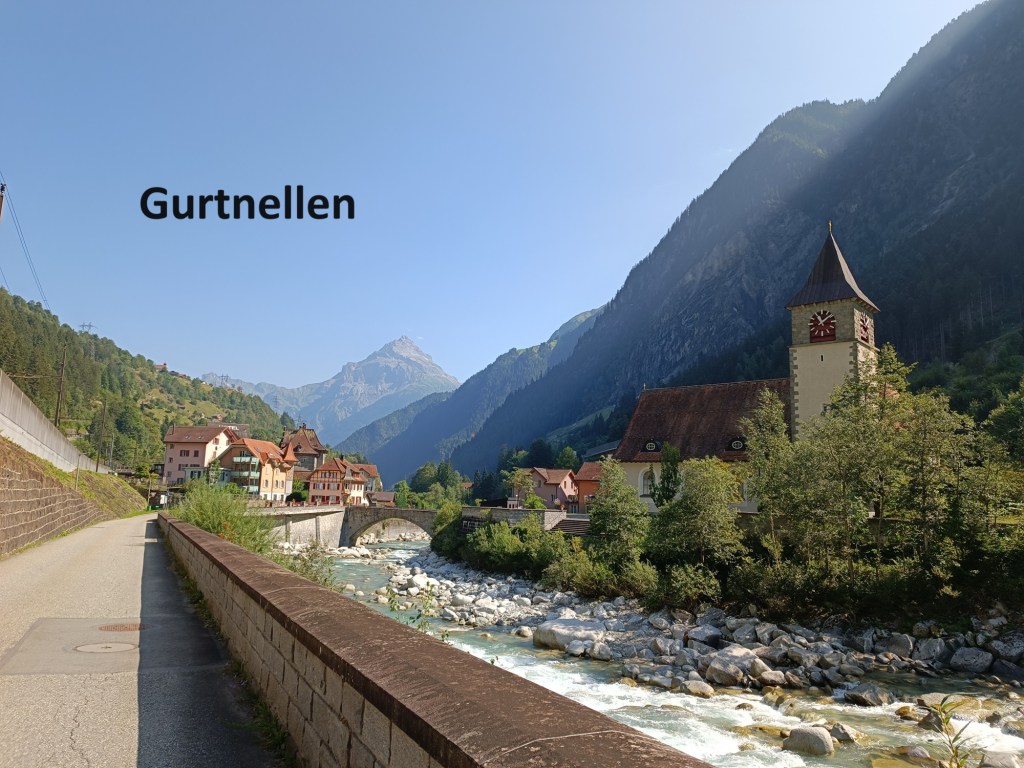
I did not take long to reach Wassen, with its little church, well known to rail travellers using the Gotthard route. The rail line going southwards snakes back and for the to climb the valley towards Göschenen, passing Wassen three times, and giving passengers a feeling of déjà vu as they see the church for a second and third time. I did not stop in Wassen, but kept on going. I passed the Wassen power station below the village and went on through Gurtnellen, all the time following the Reuss as it flows northwards.

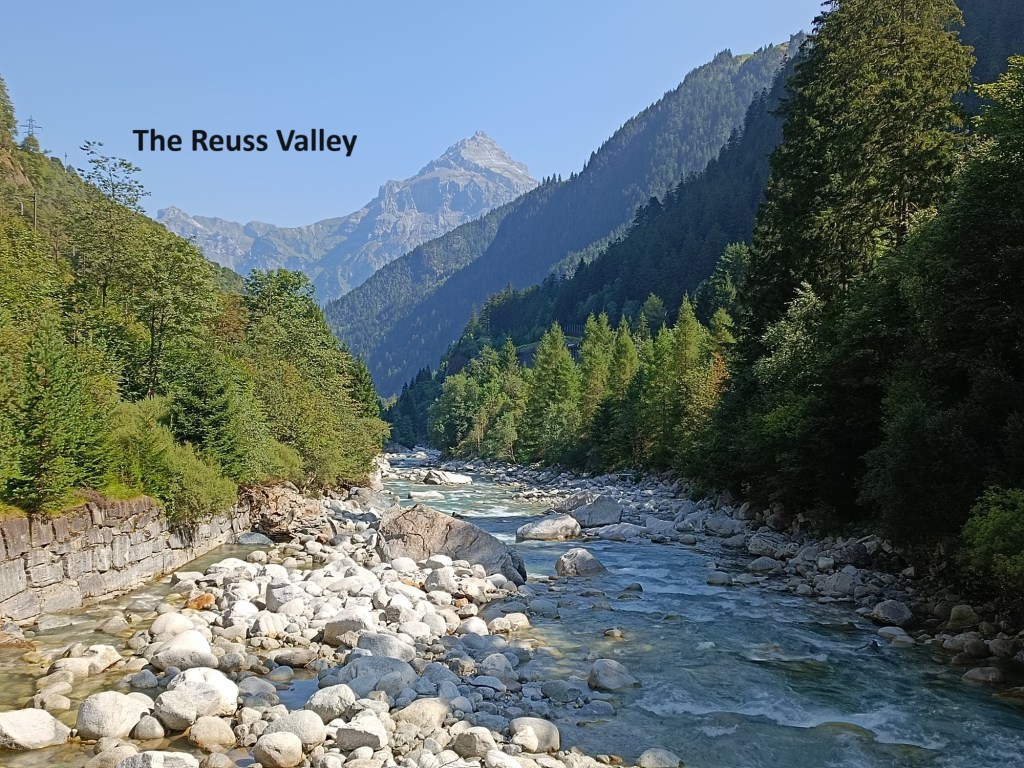

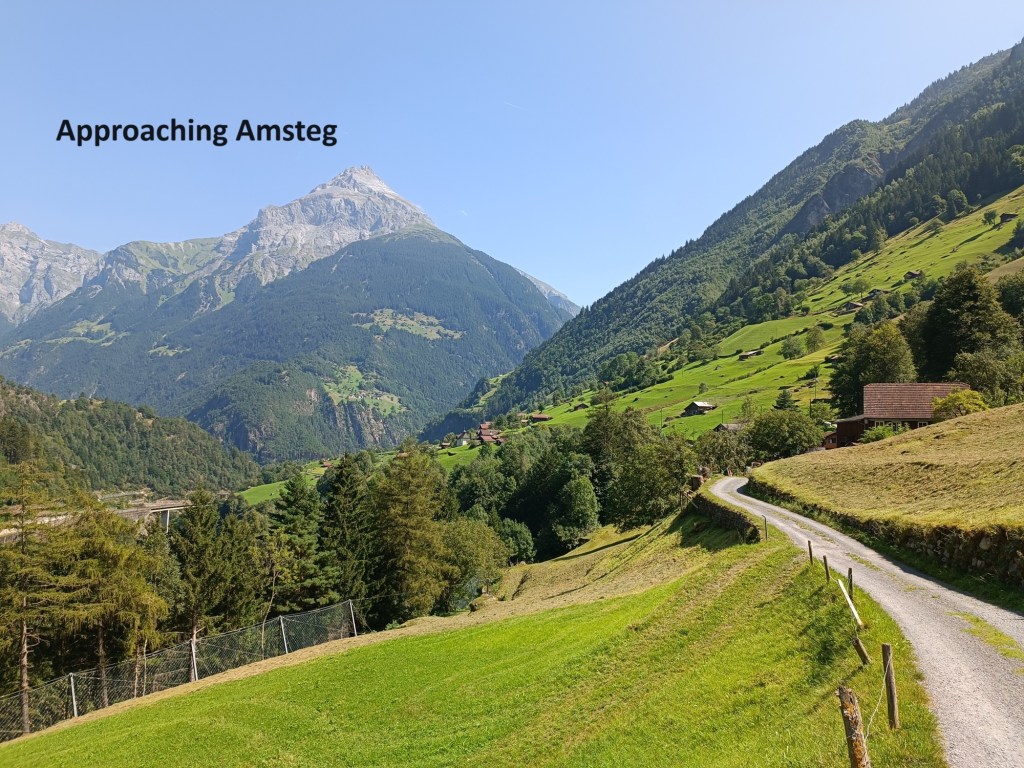
Eventually, the valley opens out, and the route becomes more gentle. It still follows its own way, almost ignoring the road. I was hoping for refreshments in Amsteg, but everywhere was closed. Going on, I passed the ruins of the Zwing Uri castle. Its destruction dates to the early days of the Swiss Confederacy, and it has almost disappeared into the landscape. The road bypasses the village of Silenen, but the trail goes through it, passing the Susthaus and the Meierturm. The Susthaus dates to the late sixteenth century when Silenen was a staging point on the trade route over the Gotthard Pass. Goods could be stored there, animals fed and watered, and the travellers catered for as well. The Meierturm was the residence of the Zürich nobles assigned to oversee the village and the surrounding area.
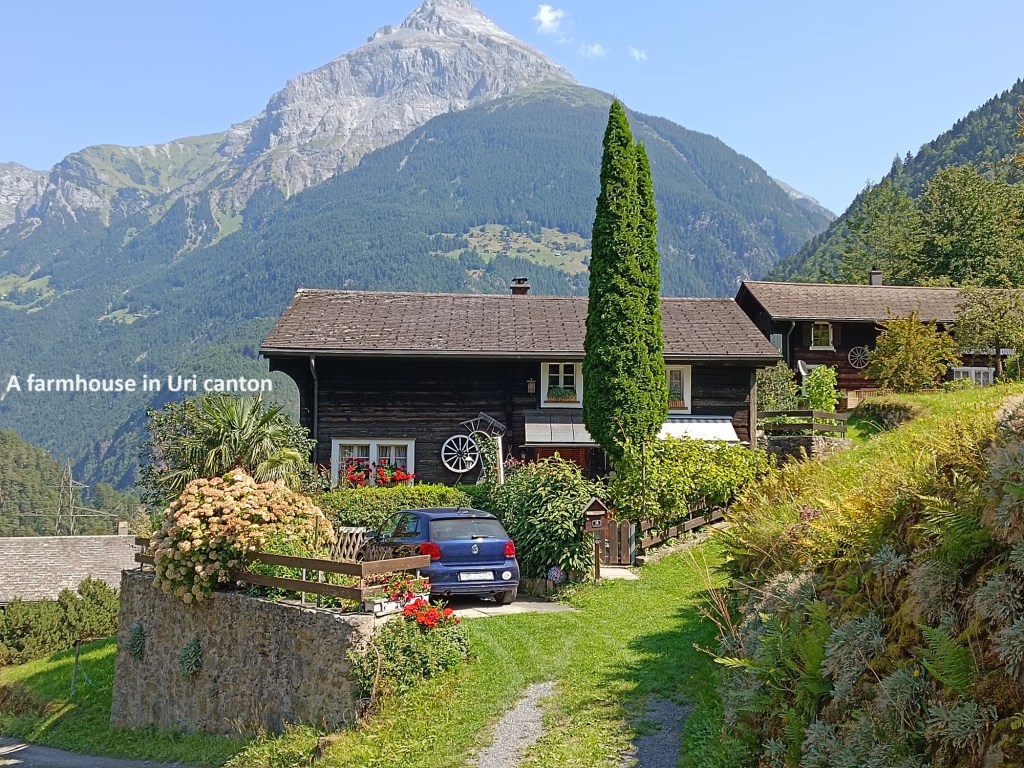

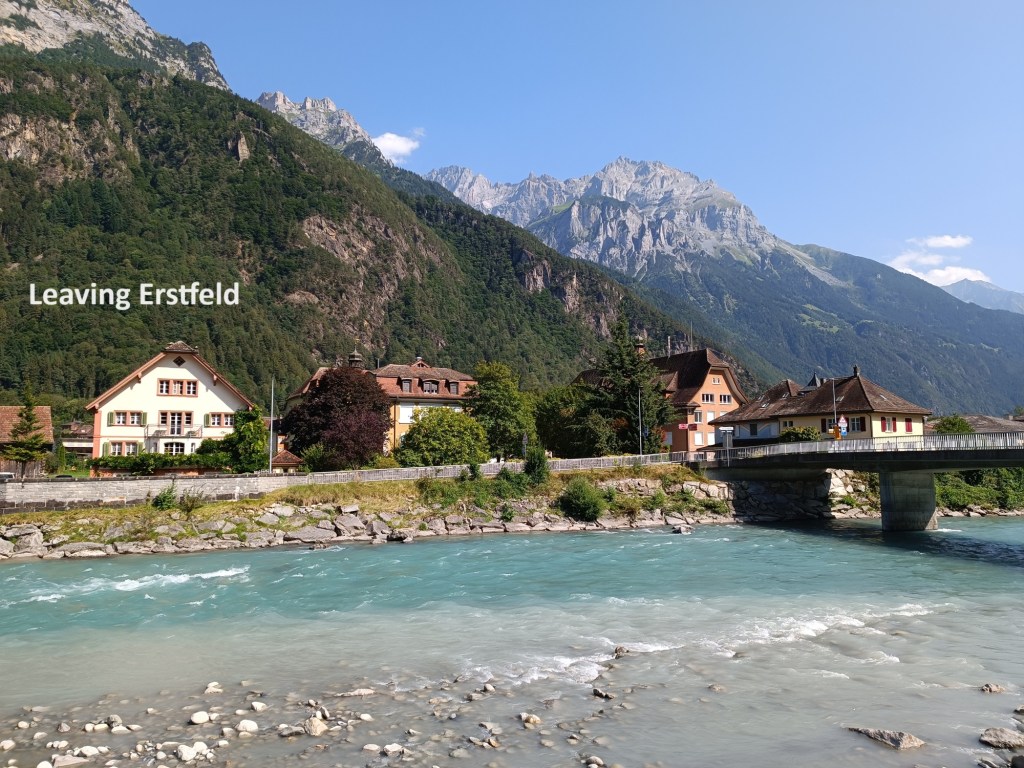
After Silenen, it did not take very long to reach Erstfeld. I found refreshment in the town and rested for a short time before going on to Altdorf. My route from Erstfeld to Altdorf was almost flat as it continued to follow the Reuss. There is one point where the mountains on the western wide come down almost into the river, and the trail has to go through a short tunnel in the rock. But apart from this it was uneventful. I did not go into the centre of Altdorf, but instead went directly to the railway station to begin the journey back to Basel.

Suvorov reached Altdorf on the even of 26th September 1799, the day after his army left Andermatt. While I consider it something of an achievement that he would get from Andermatt to Altdorf in one day, Suvorov was a day behind the schedule that he had set for himself. He had several difficulties to contend with. The French stood between him and the Vierwaldstätter See, and they had control of the boats that he needed to bring his army farther north. And that army was now short of food and supplies. Consulting with the generals under him, Suvorov had difficult decisions to make.
But my day was finished, and I had recorded 53,336 steps. I have to leave the Via Suvorov for a few weeks, but I will come back to follow the route that Suvorov took after he left Altdorf.